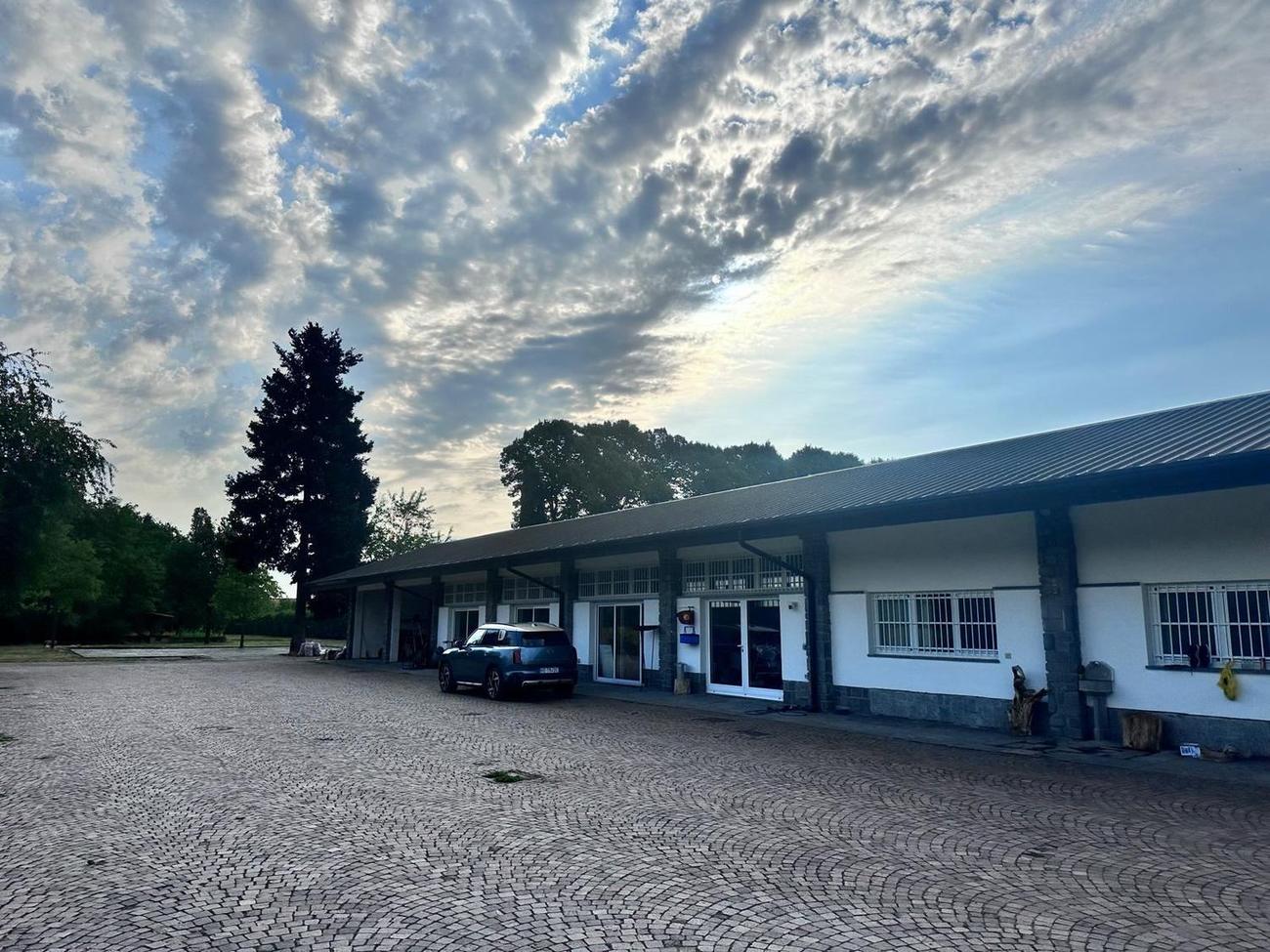
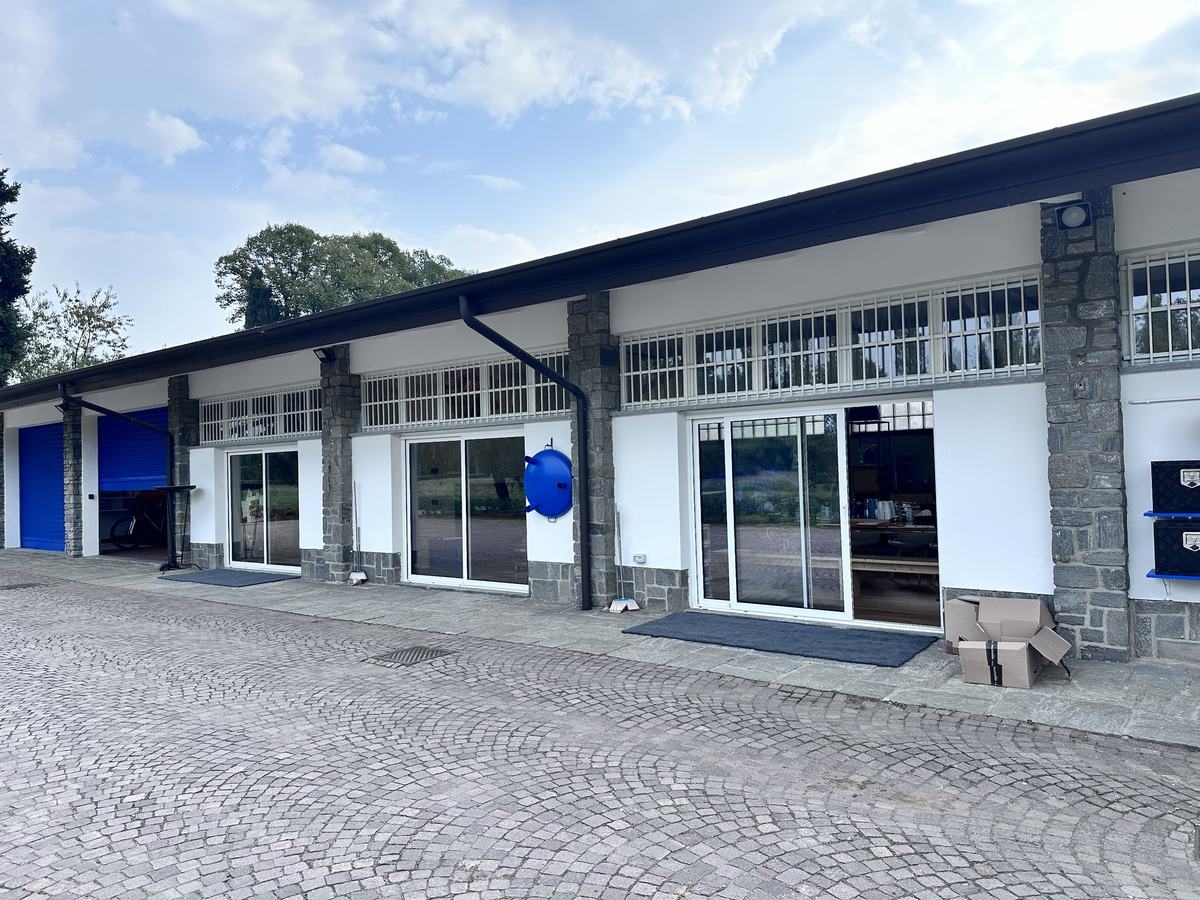
A working garage on a working farm, half an hour from Milan and twenty‑five minutes
from a landing gate, converted into the physical address of an investment practice. It is the home of
Rancilio Cube’s own events, and it opens to other companies for events made to measure.
La Cantalupa · Cantalupo di Cerro Maggiore · Milan
PostGarage is where Rancilio Cube meets its funds and hosts its investors. The same house
opens to companies, funds and communities whose events fit it.
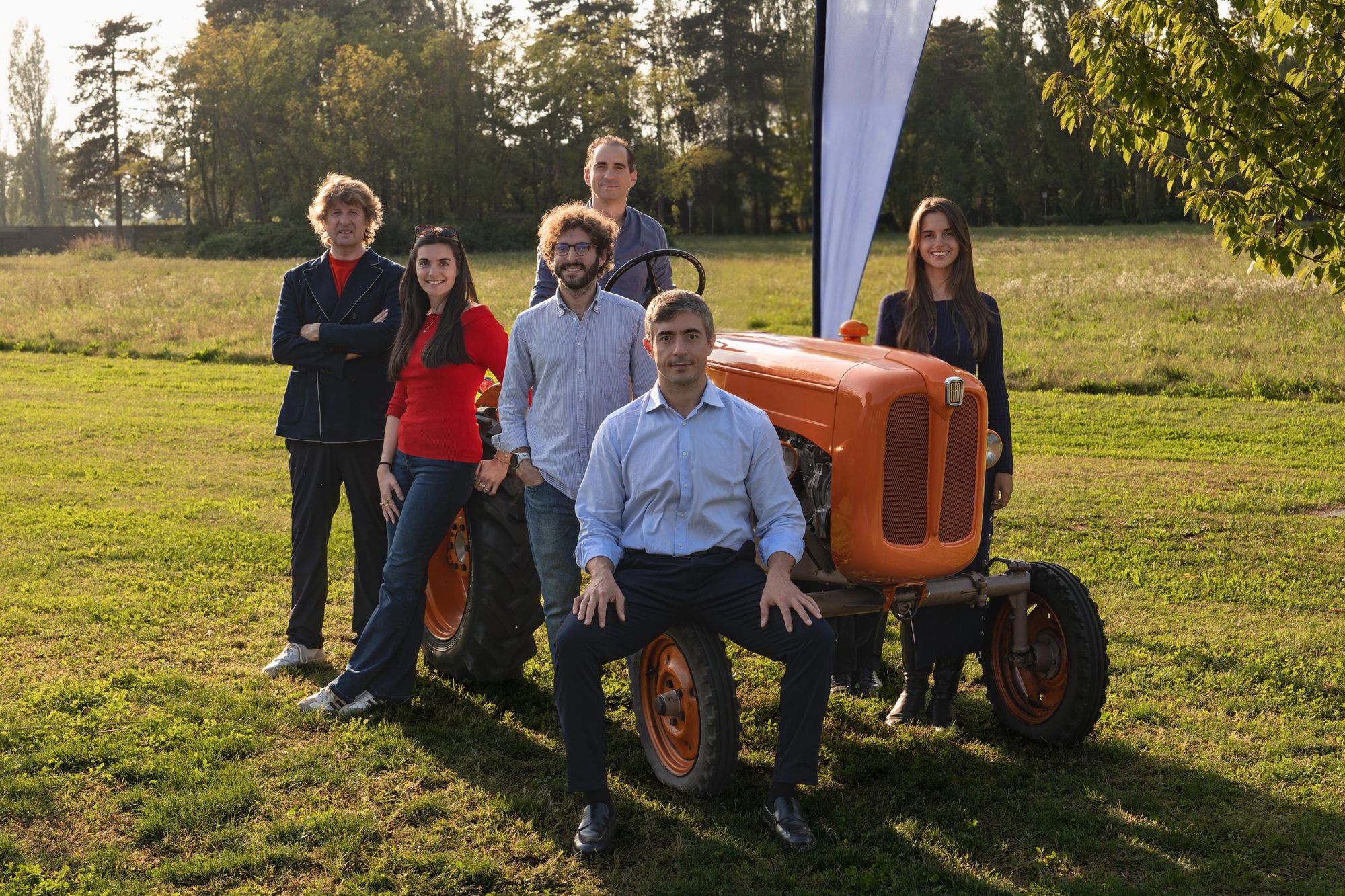
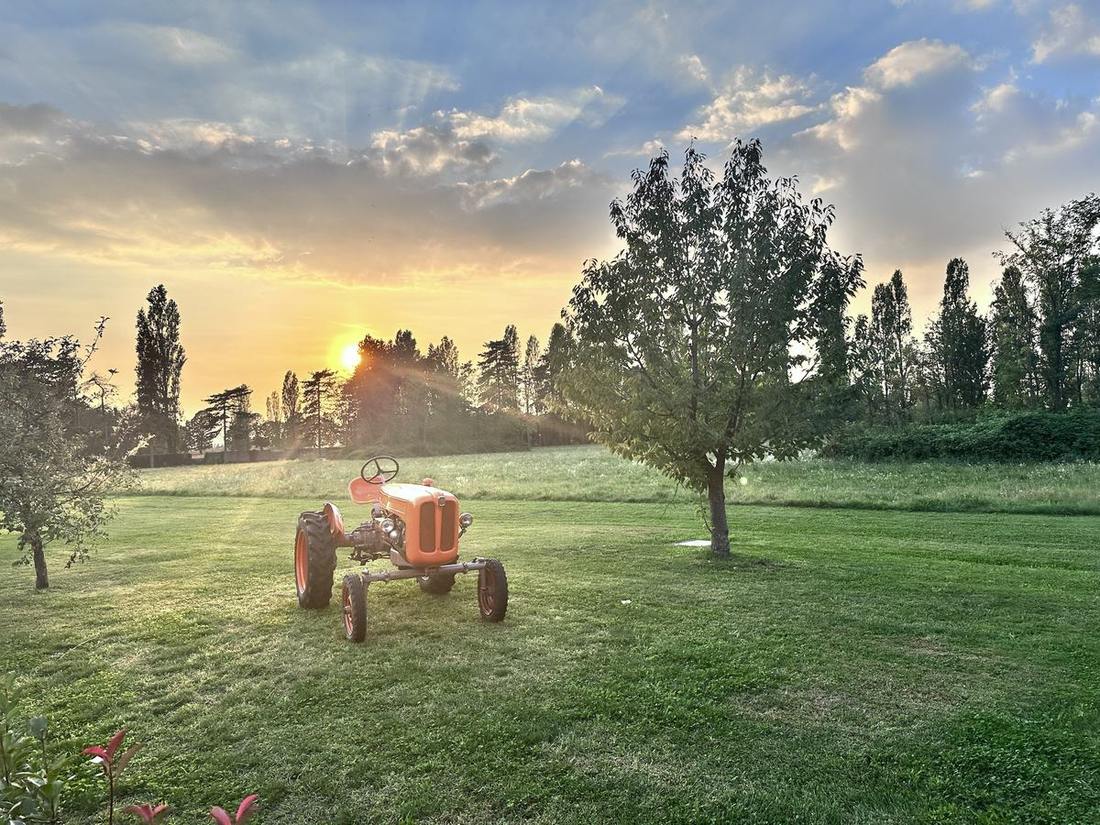
The Rancilio Cube team in the field, with the estate’s own Fiat tractor
Rancilio Cube events
Young Guns, dinners with the managers of our funds, investor briefings and the board. The house was
built around them.
Events of other companies
Offsites, board meetings, product launches, dinners and panels, hosted for companies, funds and
communities. PostGarage is not rented by the hour: every event is agreed with us.
How it works
Tell us the date, the number of guests and what the day should achieve. We design the format
with you, choose the spaces and take care of the flow of the day.
What it looks like inside, and what each part of it is good for.
Term sheets are signed on screens. Conviction is built in rooms. PostGarage is
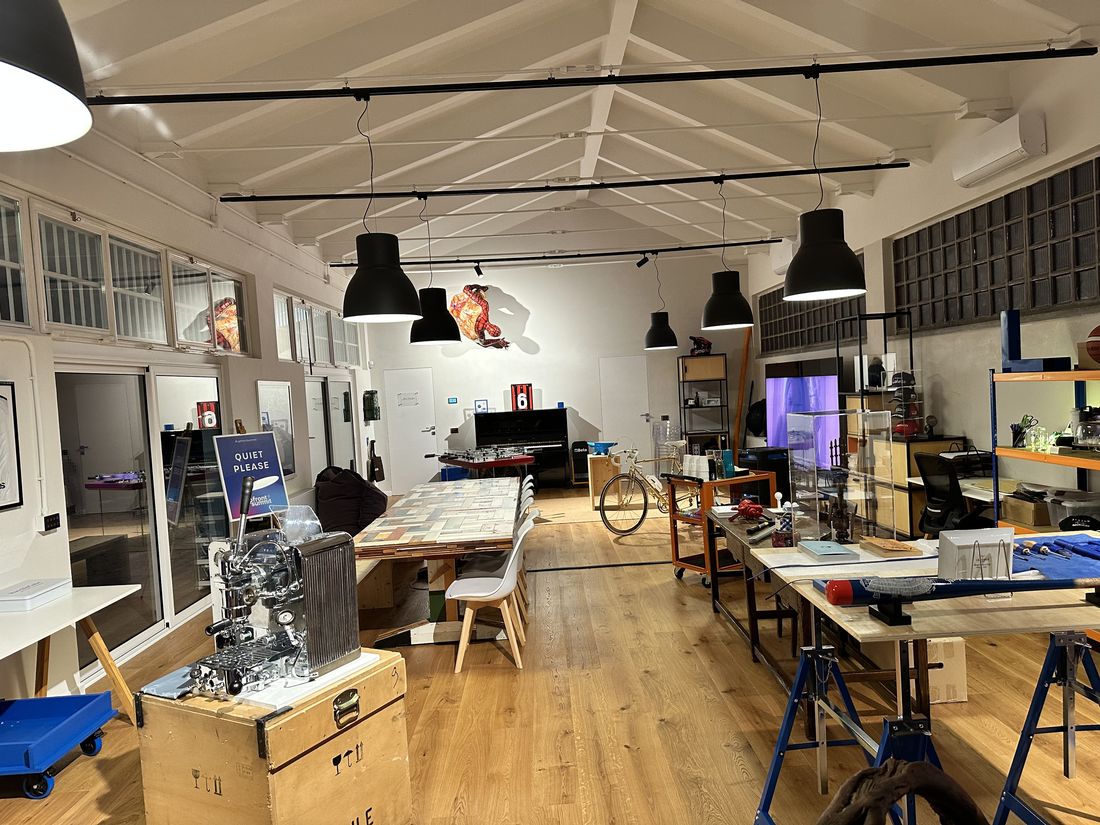
deliberately not an office and deliberately not a venue: one clear industrial span under a white truss
roof, a boardroom at one end and a lounge at the other, a workshop that never stopped being a garage,
and doors that open straight onto the courtyard.
Inside — the room and the objects
Nothing here is rented and nothing is generic. Click any frame to open it full size.
The span, working
The meeting end
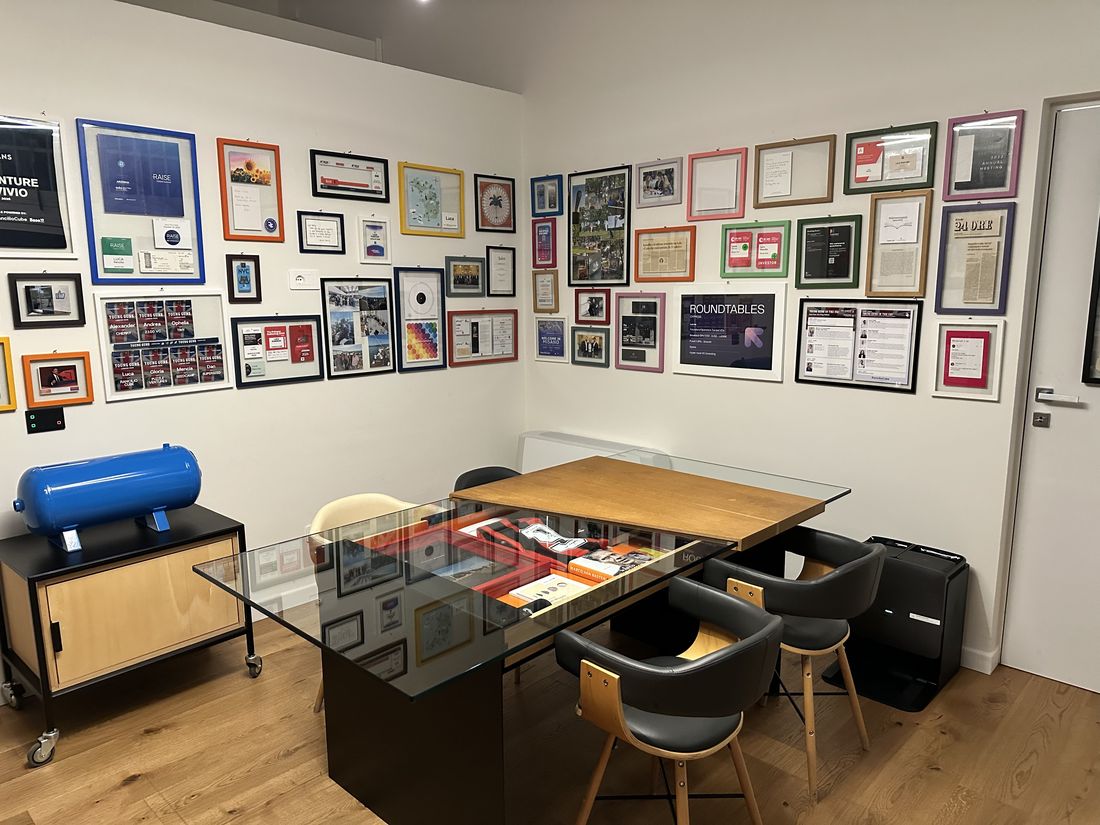
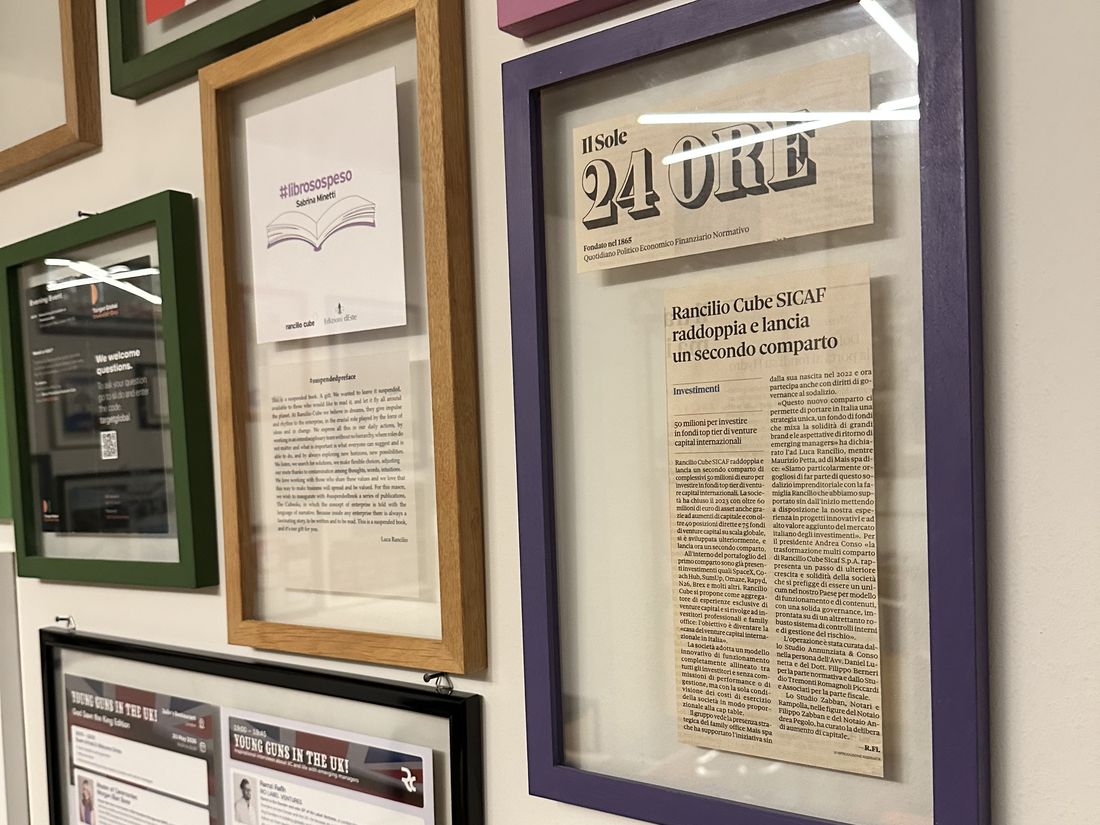
The recognitions wall
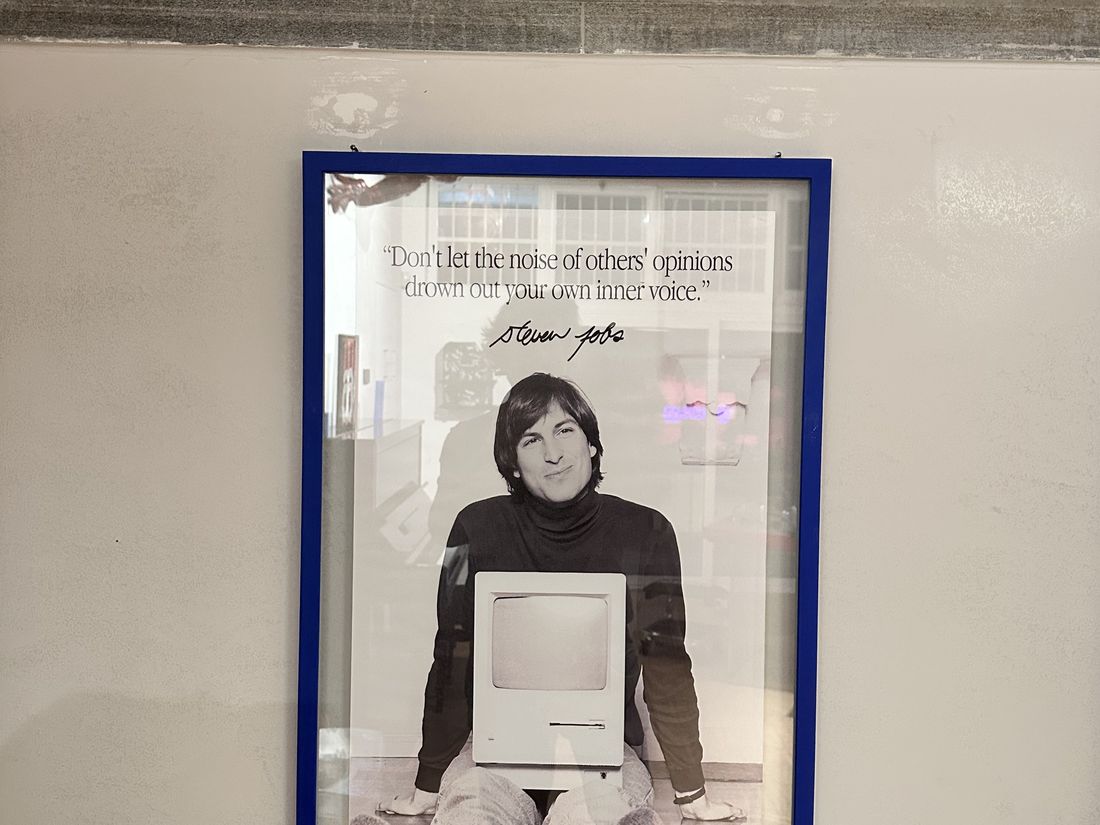
Your own inner voice
Six settings
Indoor
The Hall
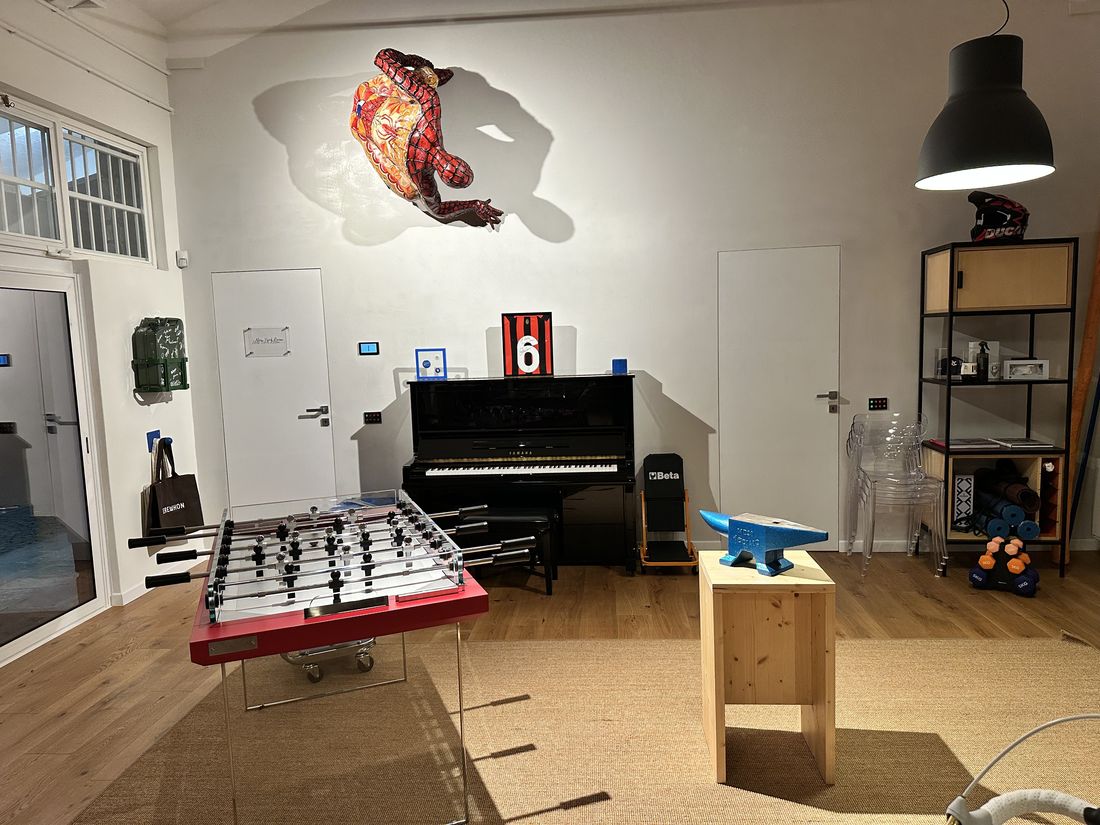
The full industrial span under the white truss roof. Modular tables, track lighting, glass‑block
clerestory on both sides, full‑height sliding doors at the end. It reconfigures in under an hour
from co‑working to seated dinner to standing reception.
Seated24–40
Standing60–80
Best forPlenary · dinner
Indoor
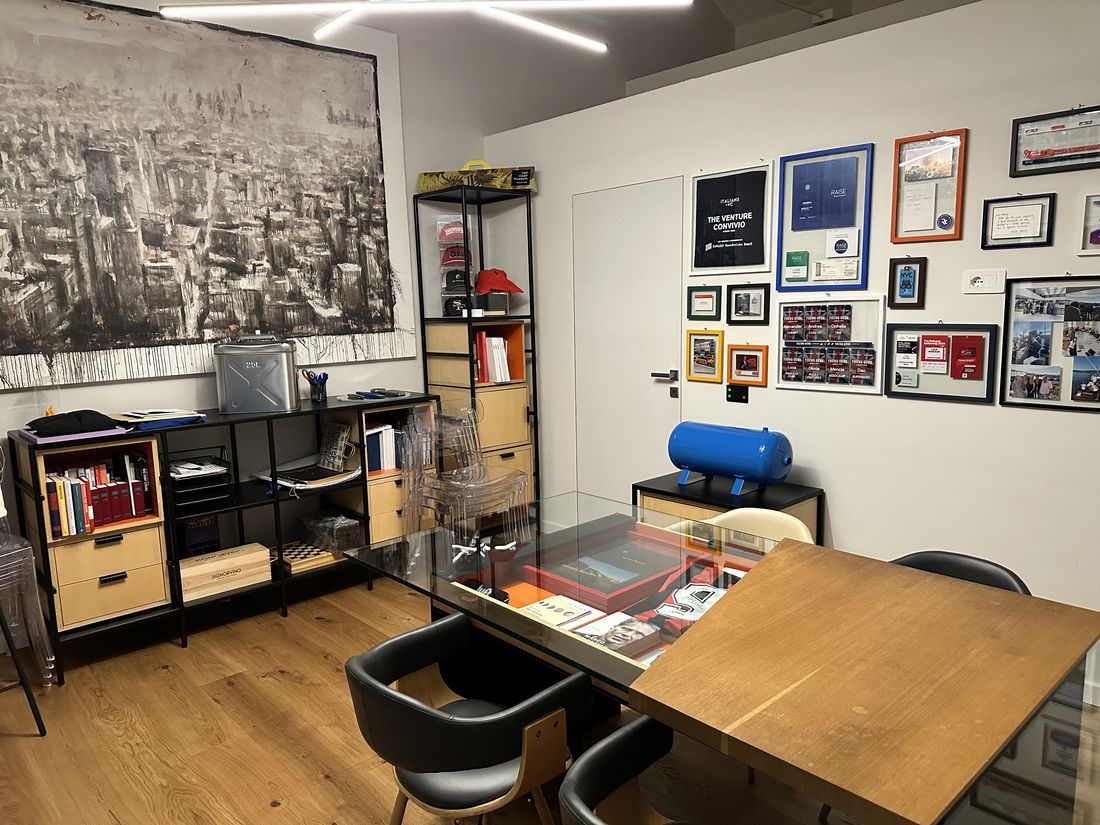
The Boardroom
Solid timber joined to a glass vitrine top, under a suspended linear fixture, facing the wall of
recognitions. The room for the board, for LP briefings and for one‑to‑one conversations with fund
GPs. A door that closes.
Seated10–14
CharacterClosed
Best forBoard · 1‑to‑1
Indoor
The Lounge
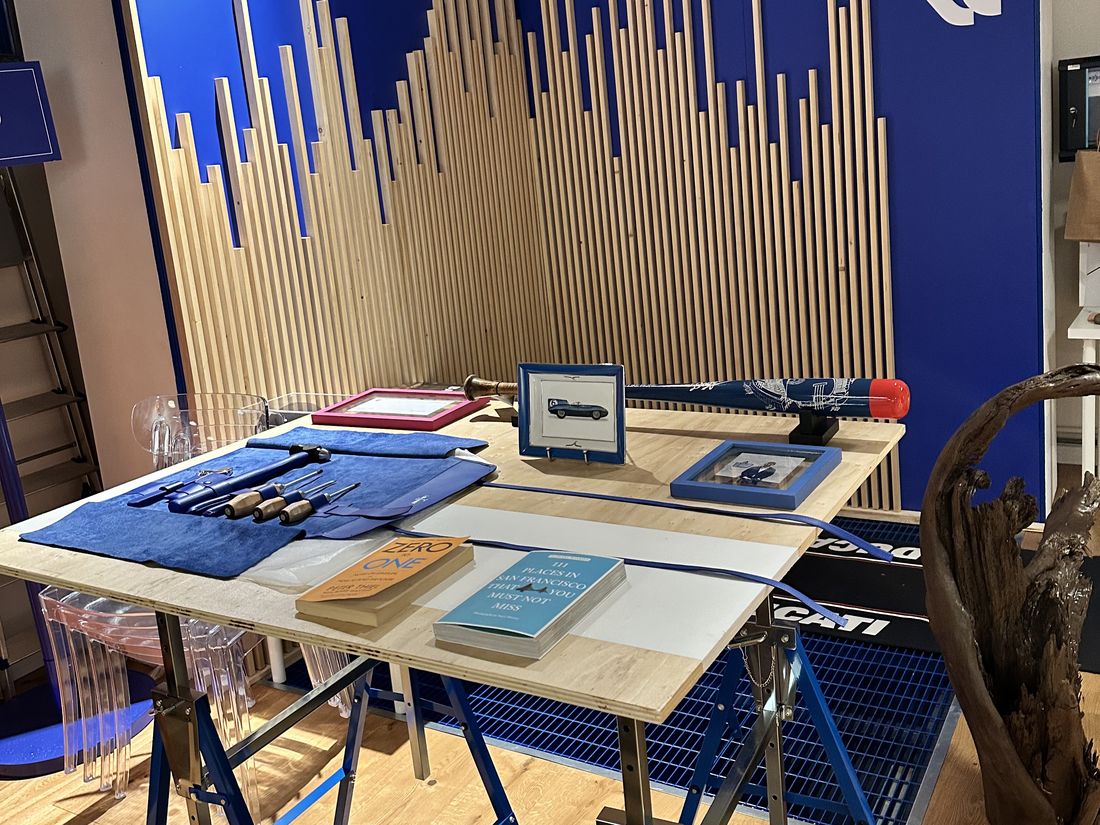
The far end of the big room: the RancilioCube blue wall with its timber dowel skyline, bean bags,
butterfly chair, SMEG. The natural backdrop for photography, video and podcast, and where the
conversation continues once the table is cleared. The wall is demountable — it travelled into the
field for Young Guns.
Informal10–18
NoteDemountable
Best forFireside · content
Indoor
The Workshop
Bench, vice, anvil, hand tools, compressed air on a reel. Hardware and deep‑tech founders can
open a product here instead of describing it — and a teardown feels like what it is.
Working6–12
KitBench · air
Best forDemos · teardowns
Outdoor
The Courtyard
Cobbled, generous, edged by the portico and the tree line. Parking for the whole guest list,
arrival aperitivo, or the place a shuttle drops thirty people without anyone queuing. Under design
by arch. Maurizio Cozzi, with the pergola and the planted relax area.
Standing80–120
StatusIn design
Best forArrival · aperitivo
Outdoor
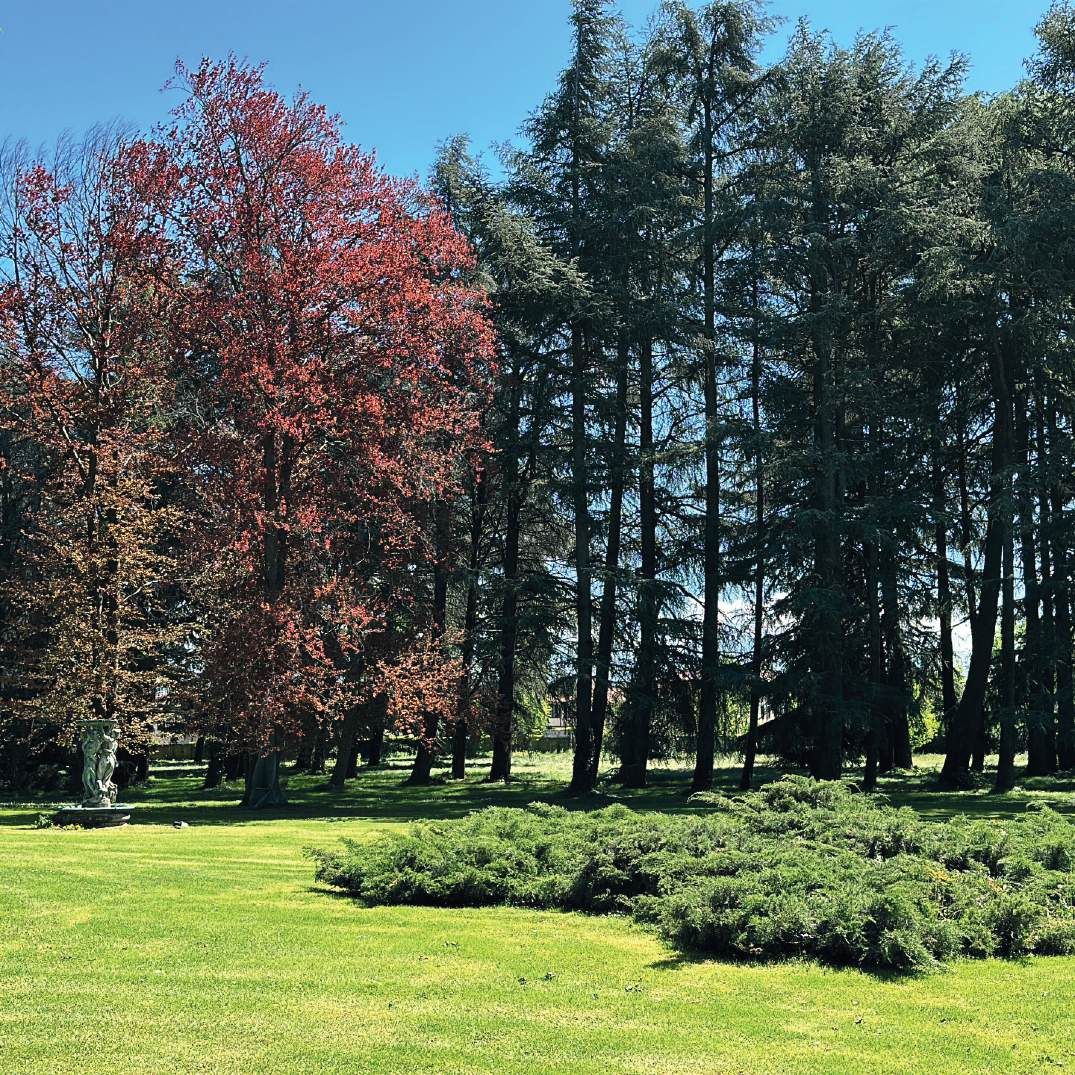
The Field
Open ground and a poplar line behind the building. A talk under the trees, clay shooting in the
afternoon, telescopes after dark. No neighbours, no curfew, real sky.
Seated80–150
SeasonMay–Sept
Best forPanels · dinners
The collection
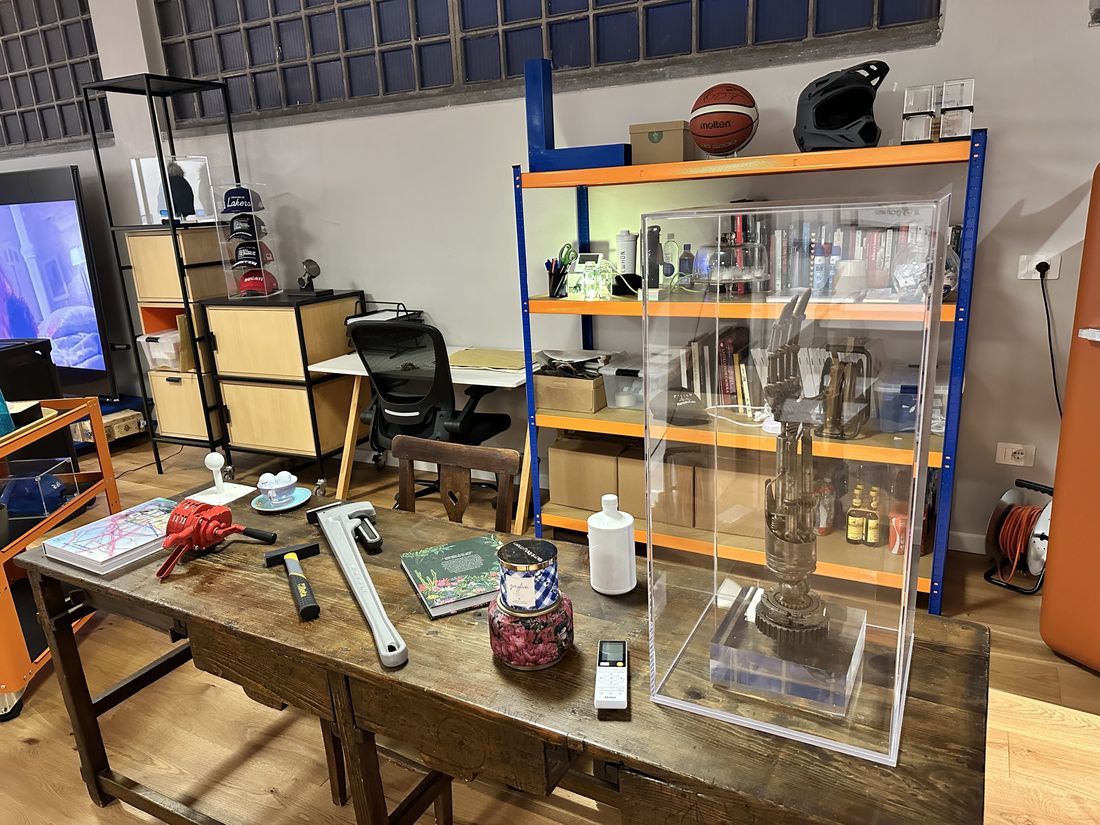
Ten things live in the house permanently, each with a firm or a hand behind it. They are not props and they are not for sale — starting with the one that gets used most.
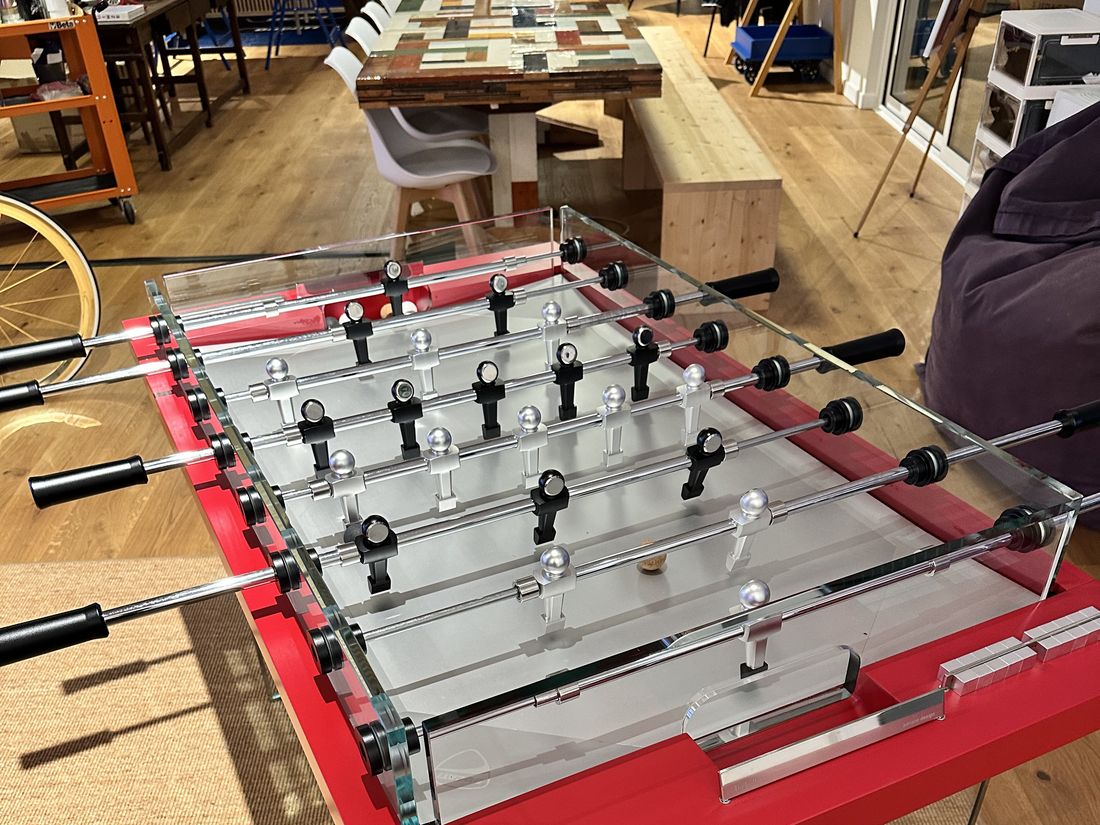
Game table · Limited edition
Teckell × Ducati Centenario
002of 100
The second table of the hundred ever made — and it is in the hall, in play, not behind glass.
Matte Ducati Centenario red, 15 mm low‑iron tempered glass walls, structural glass legs,
CNC‑machined aluminium players, and an anodised pitch with the Ducati shield etched into it. The frame carries the Teckell | Ducati
plaque; the number is engraved on the goal bar, n. 002/100.
The firms. Teckell is the design brand of B.Lab Italia, the workshop
Gianfranco Barban opened in northern Italy in 2003 and turned into a laboratory for game tables a few
years later. With Adriano Design and Marc Sadler it was the first to build foosball and billiard tables
in tempered crystal, and the material has been its signature ever since. Adriano Design drew this one
for Ducati’s hundredth year.
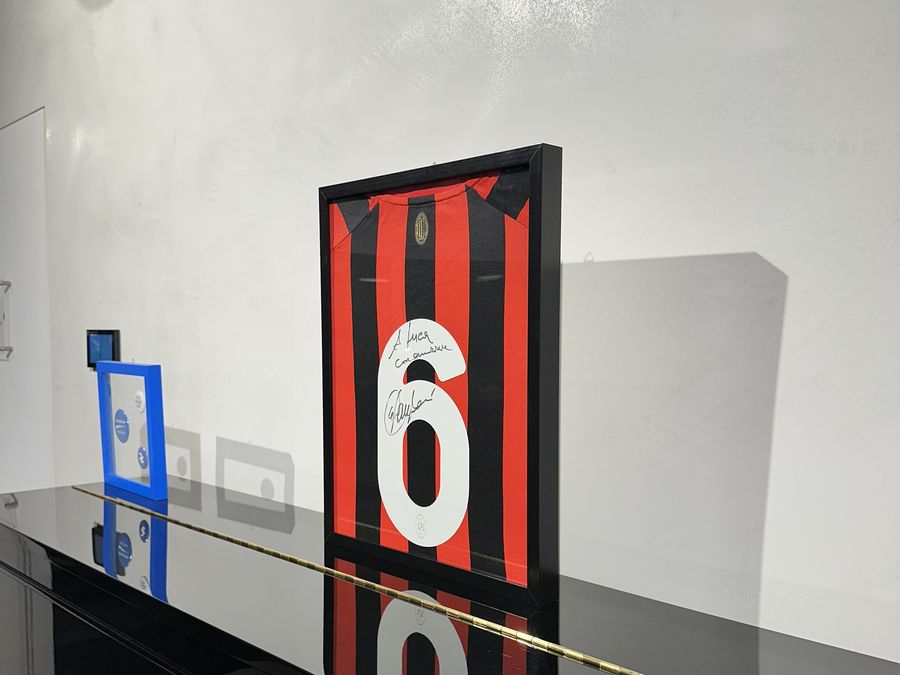
The shirt stands on the piano, signed across the number and inscribed by hand —
a Luca, con ammirazione. The 125th‑anniversary crest dates it.
The player. Born at Travagliato in 1960, Baresi joined Milan at sixteen
after Inter turned him down, debuted at seventeen in April 1978 and never played for anyone else:
twenty seasons, more than seven hundred appearances, fifteen of them as captain, three European Cups
and six league titles. He was a world champion with Italy in 1982 and captained the side to the 1994
final. When he stopped, Milan retired the number 6 — the first shirt ever withdrawn in Italian
football. He died on 31 July 2026, at 66.
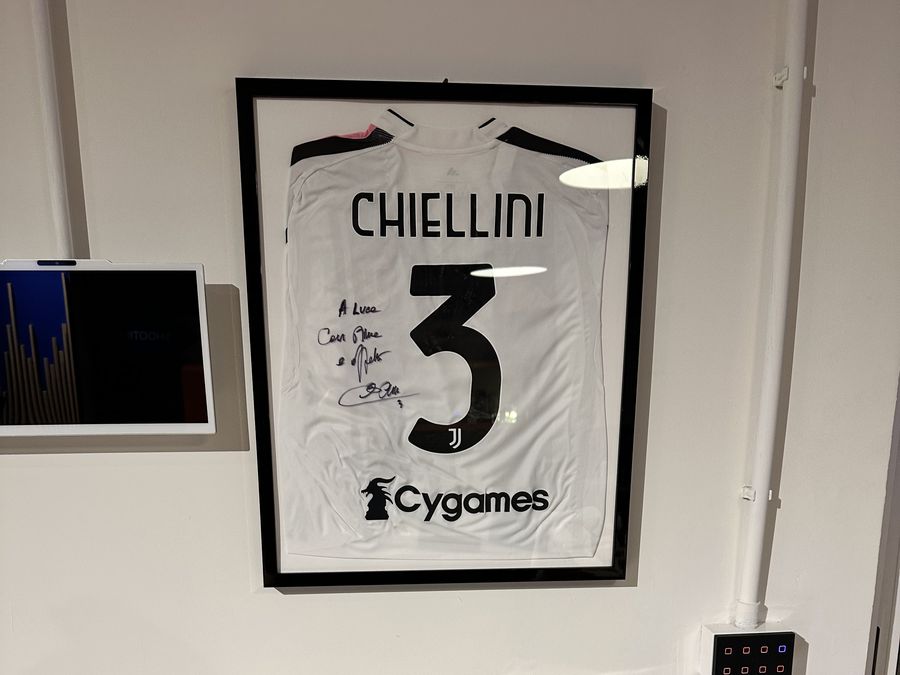
Framed above the console by the door, signed and dedicated by hand — a Luca, con stima e affetto. Below it, the tin from Young Guns 2025.
The player. Born in Pisa in 1984, he arrived at Juventus in 2005 and stayed seventeen seasons, nine consecutive league titles among them, the last four as captain. He lifted the European Championship at Wembley with Italy in 2021, finished at Los Angeles FC and retired in December 2023. In 2017, still playing, he took a master’s in business administration at Turin with full marks and a thesis on the Juventus business model. Since 2024 he has been back at the club as an executive.
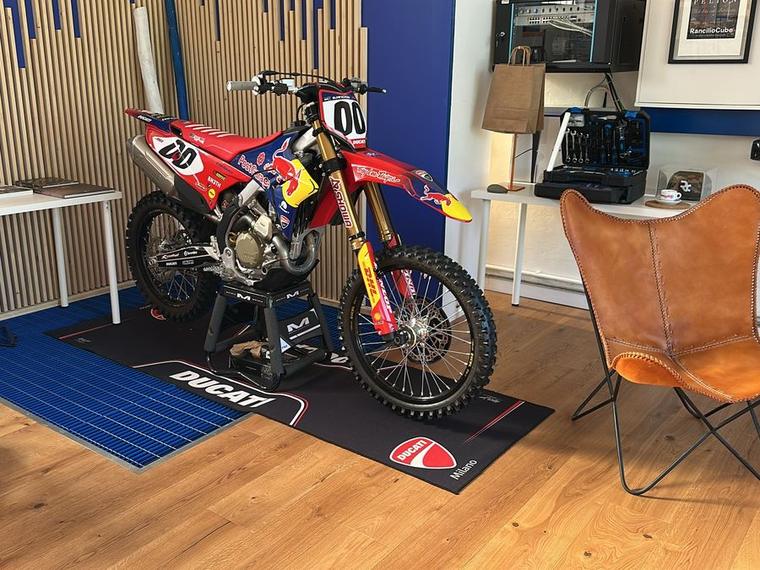
A motocross 450 in the house livery — red, blue and number 00, PostGarage on the tank — standing on its own mat at the lounge end, against the slatted RancilioCube wall.
The firm. Ducati was founded in Bologna in 1926 by Antonio Cavalieri Ducati and his three sons, not as a motorcycle works but as Società Scientifica Radio Brevetti Ducati, making radio condensers. The Borgo Panigale plant was flattened by bombing in 1944; what restarted the company was the Cucciolo, a 48cc engine clamped to a bicycle frame. Motorcycles followed, and in 1954 Fabio Taglioni brought the desmodromic valve gear that still defines the engines. 2026 is its hundredth year.
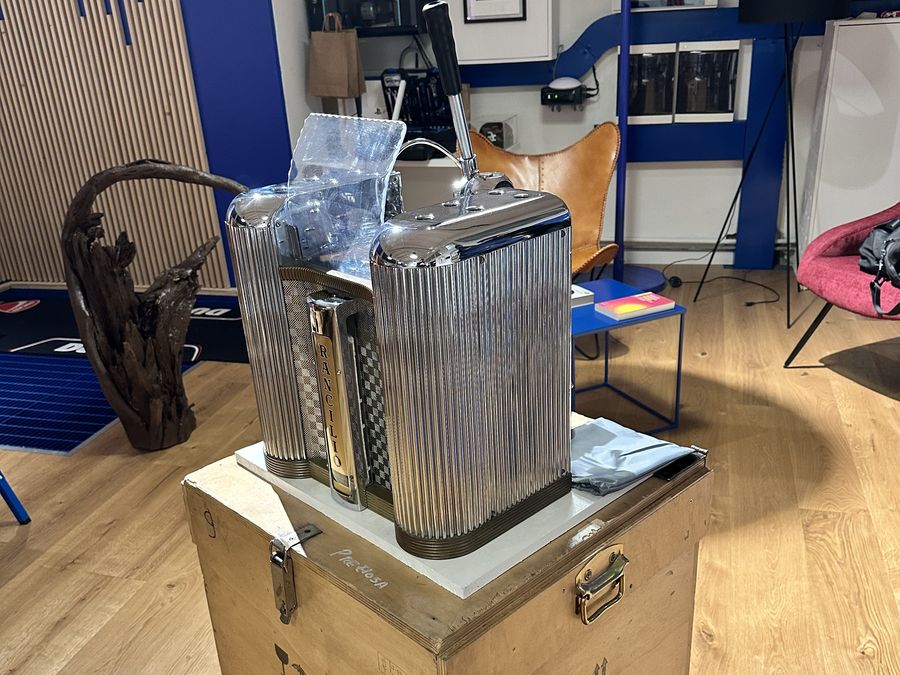
Fluted chrome columns, the name set vertically between them, standing on the wooden crate it travels in — next to the Moon Shooting sign.
The firm. Roberto Rancilio opened his mechanical workshop in Parabiago, the next town over, and in 1927 built his first bar machine, La Regina, with the double‑R logo. The company stayed with the family for three generations and in 2013 joined Ali Group; it still builds in Parabiago. The name is the one RancilioCube carries.
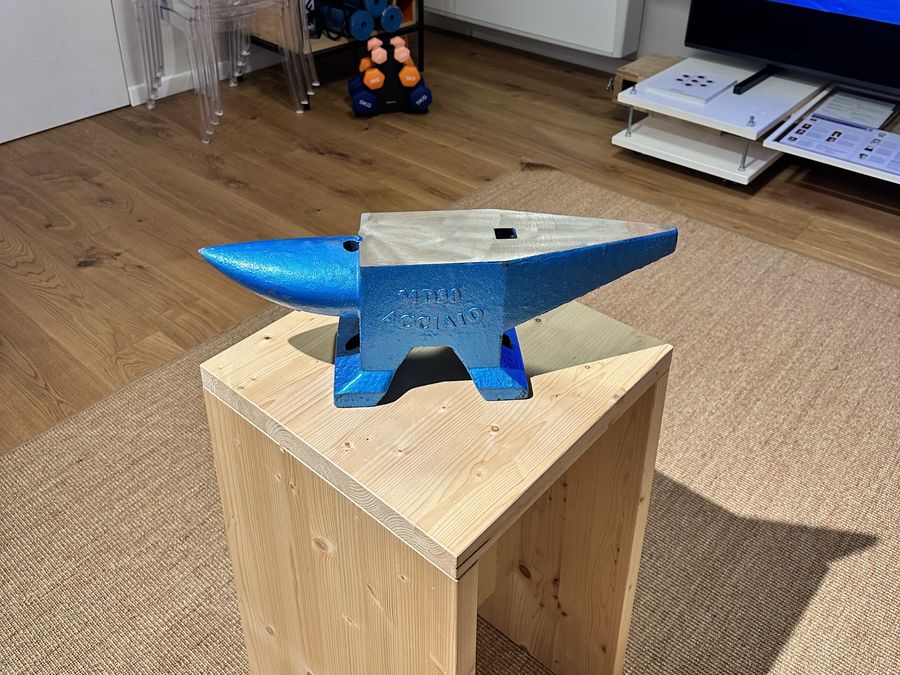
The blue anvil on its timber block in the hall, the C57S bench and tool wall in the workshop, and the orange trolley in the lounge that doubles as a drinks cart. The workshop runs on them.
The firm. Founded at Erba, near Como, in 1923, when Alessandro Ciceri opened a forge for iron and steel moulds. The Beta name was registered in 1939 and the works moved to Sovico, in Brianza, where they still are — four generations of the same family. The orange arrived in the early 1970s with motor racing: Vittorio Brambilla’s orange March‑Beta in Formula 1, then decades of MotoGP. The company turned a hundred in 2023.
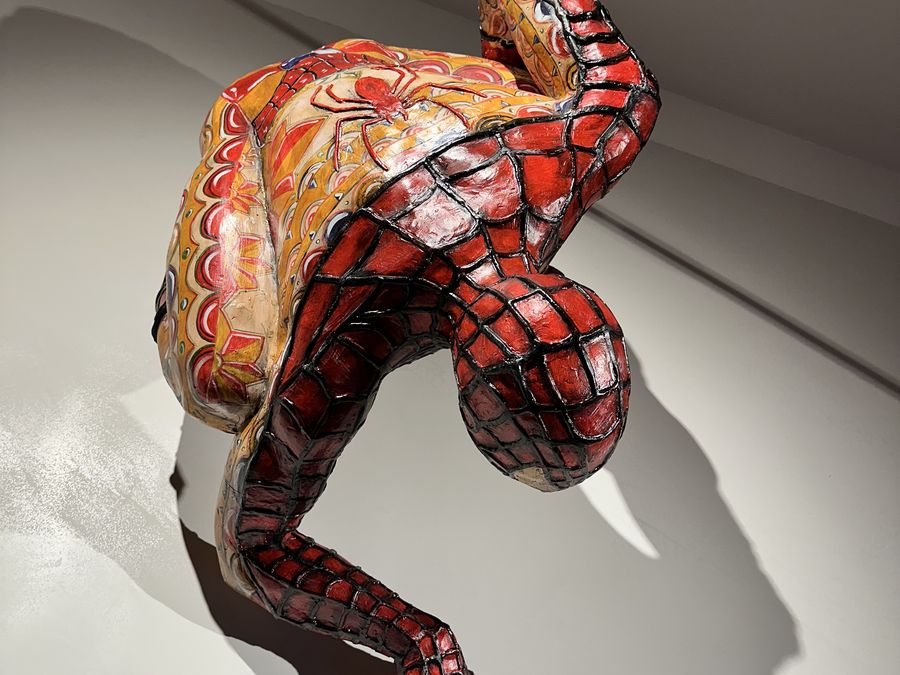
Climbing the wall above the lounge, life‑size, in resin, its skin painted in the colours of the Sicilian cart.
The artist. Born at Mazzarino in 1974 and based in Palermo, Pellegrino began the Supereroi series in 2010 after four years’ work, grafting the decorative painting of the Sicilian carretto onto hyperrealist superheroes. In his own reading Spiderman stands for Apollo. The same hand made the Genius Panormi for Palermo’s Botanical Garden and the illuminated Sicily sunk off Lampedusa.
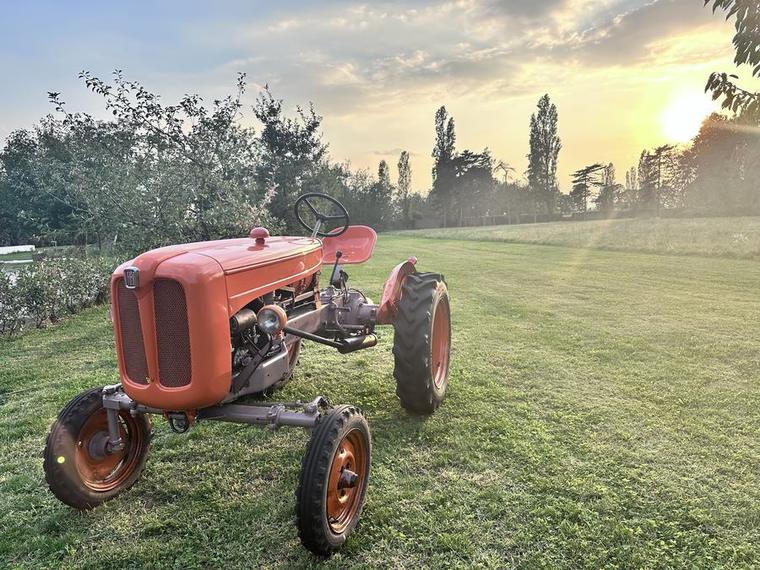
A small orange Fiat from the 1960s, parked in the field it still works. The estate’s own machine, not a prop.
The firm. Fiat built the 702 in 1918, the first Italian tractor made in series, and spent the next sixty years putting Italian agriculture on wheels. The business was spun out as Fiat Trattori, became Fiatagri in 1983, and merged into New Holland in 1991 — today part of CNH. The orange is the period livery.
Instrument
Yamaha — Piero Salvatori
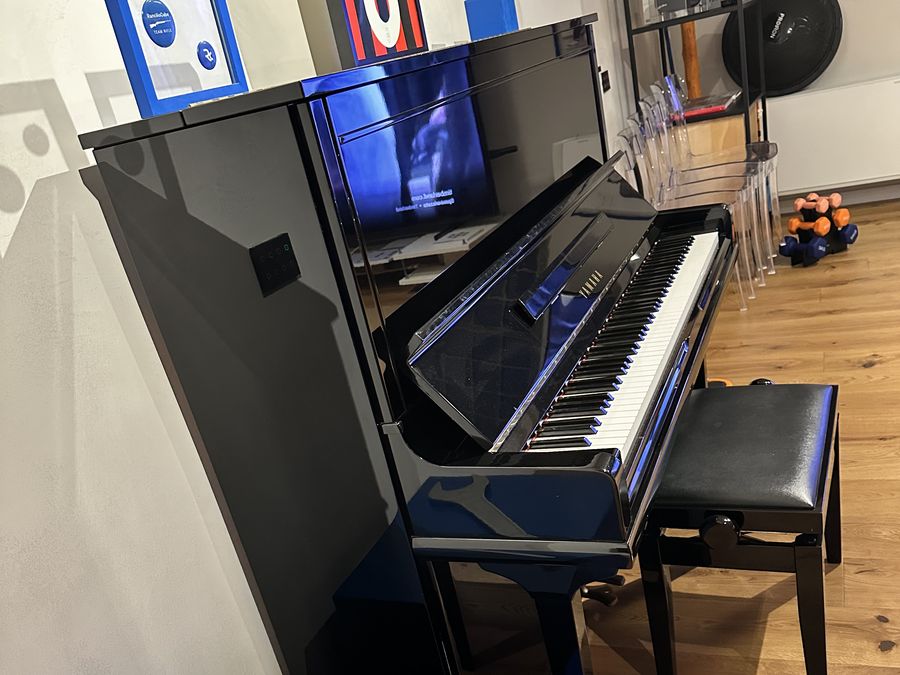
The upright in the hall, against the wall the Teckell faces. It is there to be played, usually by Piero Salvatori.
The musician. Cellist, pianist and composer, born in Rome in 1969, a Yamaha Artist since 2016 and the author of Flyaway for Sony Music. He has played with Gino Paoli, Paolo Fresu, Uri Caine, Lucio Dalla and Celentano, and wrote the music Roberto Bolle dances to in Bolle and Friends.
The firm. Yamaha began in Hamamatsu in 1887, when Torakusu Yamaha repaired a broken reed organ and decided to build his own. The three crossed tuning forks have been on the instruments ever since.
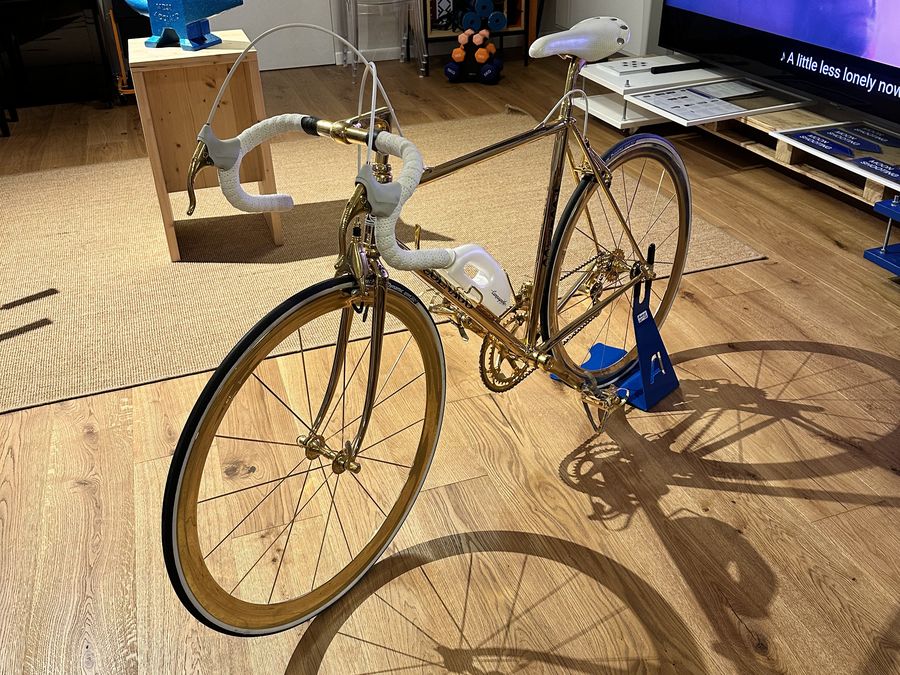
A gold‑plated Master on a white Brooks saddle, kept rideable rather than mounted.
The firm. Ernesto Colnago opened his frame shop at Cambiago, outside Milan, in 1954, and built the bikes Eddy Merckx rode to the hour record. The Master, with its star‑section Gilco tubing, is the frame the workshop is remembered for.
Where PostGarage is, what surrounds it, and how long it takes to get there.
PostGarage sits inside La Cantalupa, a working agricultural estate at
Cantalupo, a frazione of Cerro Maggiore. Fifty enclosed hectares: forage and hay in bales, maize and
cereals, Italian‑strain hares bred in the wild, sunflower fields in July.
The estate was used for shoots, private lunches and dinners long before venture capital arrived.
What changed is the long shed on the north side of the courtyard, which RancilioCube converted into
something more specific.
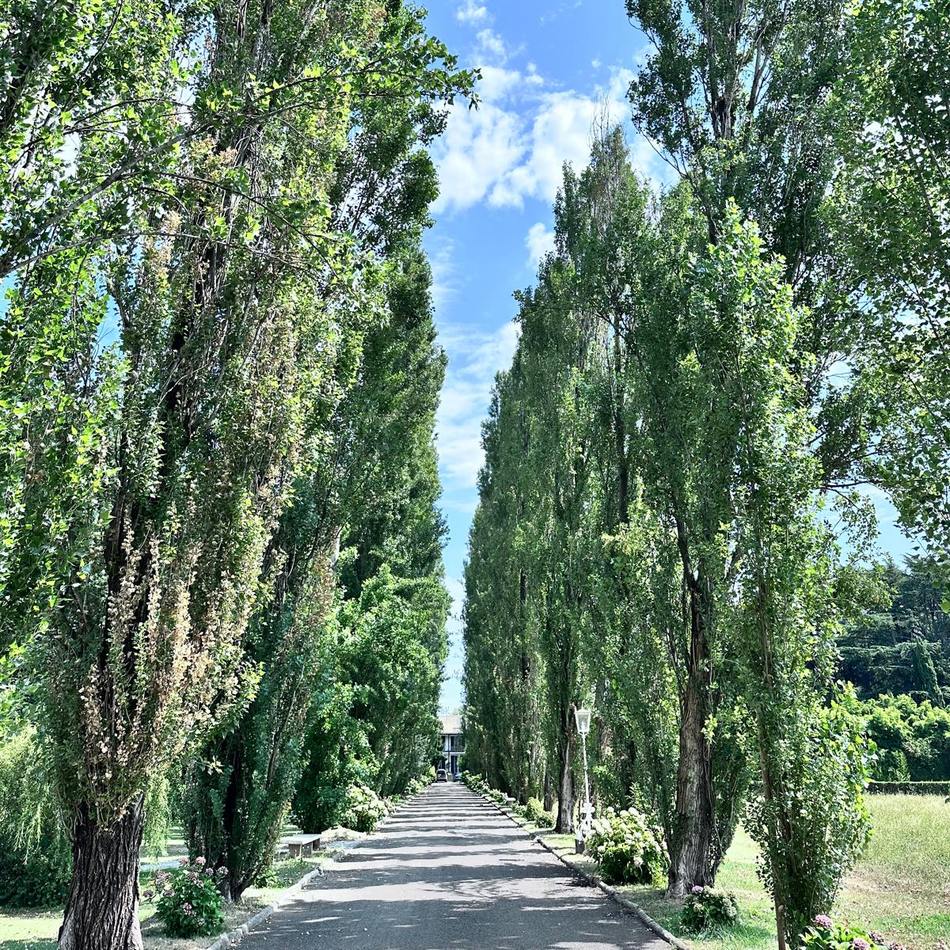
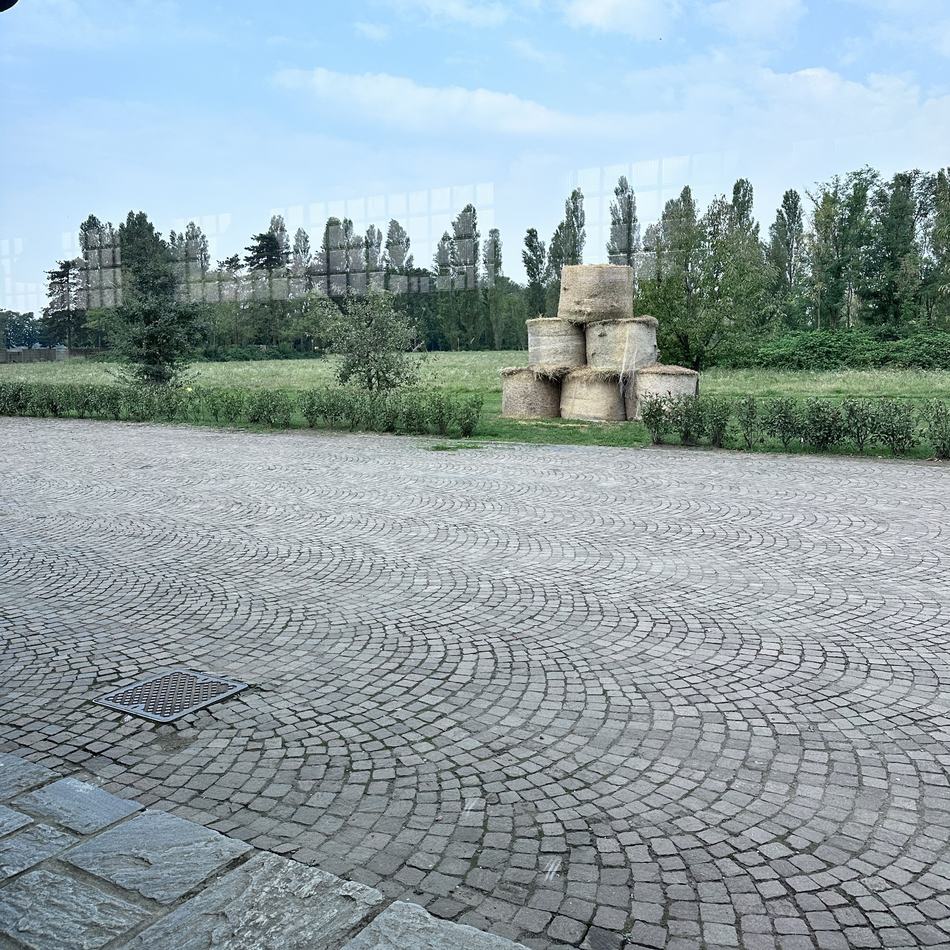
The setting does most of the work: cobbles, a portico, a poplar line, an open
field, no neighbours — and a motorway exit ten minutes away.
The drive
The courtyard and the bales
Getting there
A8 Milano–Varese
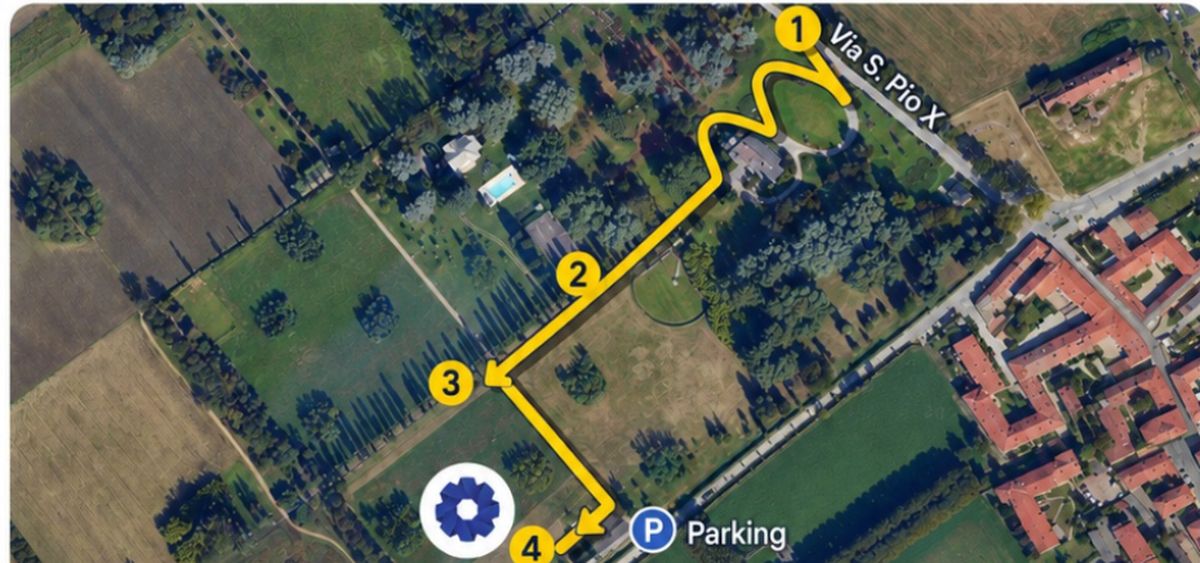
Tap a route to see it drawn on the map — then the last mile, from the gate in.
Travel time
Milan city centreA8 Milano–Varese, Legnano exit
35′≈30 km
Malpensa AirportSS336 then A8 southbound
25′≈25 km
Linate AirportTangenziale Ovest then A8
50′≈45 km
Canegrate / Legnano stationSuburban line S5, regional R21 · RE5
10′by car
The last mile
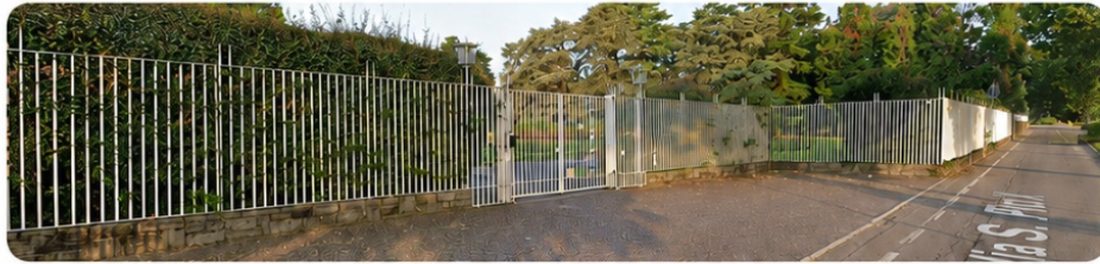
The gate is unsigned and easy to pass. It is the white gate on the left as the road leaves the
village. Once through it, stay on the drive — you are already on the estate.
From the gate
1Enter from Via San Pio X 5
2Straight on, past the villa
3Left at the poplar line
4PostGarage, park on the courtyard
The gate, on the map
Send this to a driver and they will stop at the right gate rather than at the farm entrance
further along the road.
La Cantalupa — Via San Pio X 5, 20023 Cerro Maggiore (MI), Italy.
Gate 45.582184° N · 8.975872° E · PostGarage 45.579803° N · 8.974144° E
On arrival
In through the gate at no. 5, past the villa, left at the poplar line, into the cobbled courtyard. Unsigned from the road, gate access by arrangement.
On site: hall, boardroom, lounge, workshop, courtyard, field and kitchen.
See it from above
The long shed with the pitched dark roof, the courtyard, the poplar line and the open fields
behind — the whole estate reads in one frame from 800 metres up.
Driving times are indicative and outside peak hours. The A8 exit sits roughly ten
minutes from the gate.
Events
Indoors and out
Eight formats the building supports as it stands, for Rancilio Cube and for the
companies we host — no marquee, no caterer's compound, no coach transfer.
Board & committee
Governance held in the room instead of on a call, with the papers on the table.
Boardroom · 10–14
One‑to‑one meetings
GPs, founders, advisors. A door that closes and an afternoon that can run long.
Boardroom · 2–6
Presentations & demos
Projection on the white gable, or a product opened on the workshop bench.
Hall / Workshop · 10–40
Dinner
The hall becomes one long table, with the collection as the backdrop.
Hall · 16–40
Apero & reception
Courtyard on arrival, lounge afterwards. Standing room without a queue.
Courtyard · 40–120
Private work sessions
Days off‑grid for a team that has to finish something. No reception, no commute.
Whole house · 4–20
Panels outdoors
Stage in the field, chairs under the trees, the blue wall carried out of the building.
Field · 60–150
Content & shooting
The house is already a set. Portraits, fund video and podcast in a single day.
Lounge / Hall · Crew
Capacity, space by space
Space
Seated
Standing
Best for
The Hall
24–40
60–80
Plenary, dinner, reception
The Boardroom
10–14
—
Board, briefing, one‑to‑one
The Lounge
10–18
25
Fireside, content, after‑dinner
The Workshop
6–12
20
Demos, teardowns, making
The Courtyard
60–80
80–120
Arrival, aperitivo, demo day
The Field
80–150
200
Panels, summer editions, stargazing
Whole estate
—
≈200
Full‑day programmes moving between settings
Figures are indicative and depend on layout, season and catering setup.
A past event at PostGarage
Young Guns under the stars
18 June 2025 · La Cantalupa, Cerro Maggiore
Rancilio Cube brought Italian LPs, family offices and a bench of emerging European GPs to La Cantalupa for a single afternoon and evening, hosted by Inés Makula.
Clay shooting from two until six, with a certified instructor and a leaderboard. Two panels at six on a stage built in the field, with the blue wall carried out of the building and set under the trees: European VC after 2022, then emerging managers on what it takes to raise a first fund. Apericena in the garden, then telescopes and an astronomer until eleven.
On stage: Tiny VC · Picus Capital · Firstpick · Belief Capital · Andrena Ventures · Apollo Health Ventures
Nobody was moved by coach and nobody left at nine. It is the kind of day PostGarage was made for, and the kind we design with the companies we host.
PostGarage — La Cantalupa, Via San Pio X 5, Cantalupo di Cerro Maggiore (MI). A space of Rancilio Cube.
Grounds and interiors under design by arch. Maurizio Cozzi, minusarch.it. Capacities and travel times are indicative.